

Travel
Saturday, June 21, 2014
Tanzania to construct museum in Ngorongoro
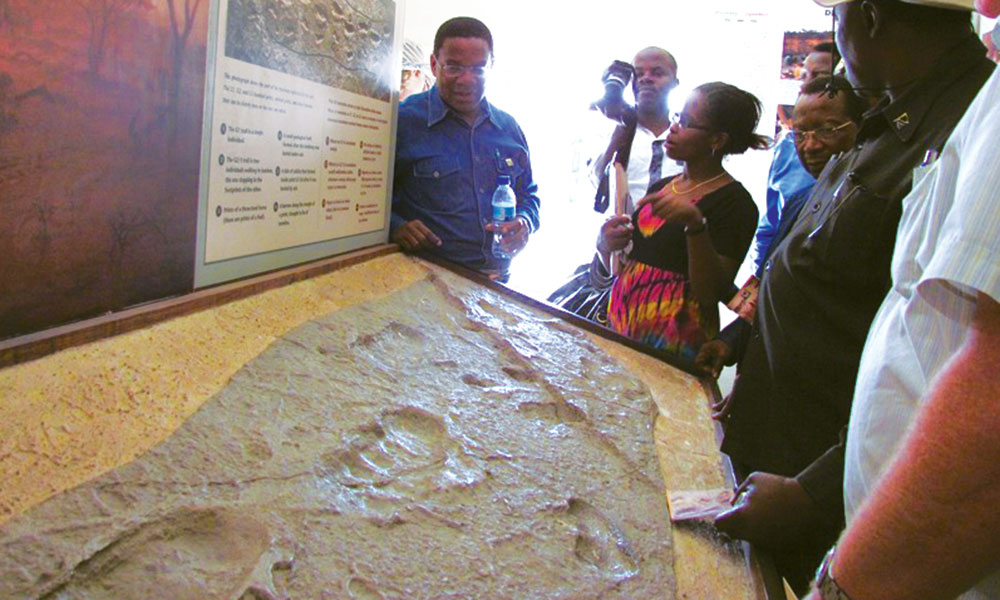
ARUSHA, Tanzania - Construction of the long-awaited world first “real human history” domestic museum in Ngorongoro Conservation Area, northern part of Tanzania, is to start early next year.
The Tanzanian government is to foot the bill, which should now be in the range of 30 million dollars for the construction of the large state-of-the art, technological museum capable of regulating its own temperature and weather conditions in order to preserve the footprints and display the marvel to visitors.
“Technical drawings for the proposed live hominid footprints museum will be completed before the end of this year, paving the way for the project to start,” said Adam Akyoo, public relations manager for the Ngorongoro Conservation Area Authority (NCAA).
The facility will be built at the Laetoli archaeological site at the further end of Ngorongoro Conservation Area. The ultra-modern “Jurassic Park” is to feature a human-foot shaped enclosure. “Once completed, the dome museum is expected to top all tourist sites in East Africa in popularity, because the whole world will be flocking to Laetoli to get a glimpse of real footprints made by their forefathers some 4 million years ago,” the official said.
Discovered by Dr. Mary Leakey in 1978, the 3.6 million years old hominid tracks-way found on locality 8 site B in Laetoli, features immortalized footprints of three human beings - a man, woman and child who must have walked on soft and wet volcanic soil which preserved the prints upon checking into rock.
Curator Godfrey Ole Moita, head of the archaeological site, explains that Laetoli is the only spot on earth with such human footprints left by “Australopithecus Afarensis,” on volcanic ash at Laetoli, providing strong evidence of full-time bipedalism.
The human ancestors, Australopithecus Afarensis, according to Ole Moita, lived between 3.9 and 2.9 million years ago.
The assistant curator of Laetoli Margaret Kaisoy said that the length of the Laetoli ground volcanic plate onto which the pre- historic footprints have been imprinted, stretches to over 30 meters before disappearing underground in the hot savannah, though scientists believe that more prints can be found upon further digging.
The hominid footprints have been concealed under special layers of sand and rock since 1979 but in 2010, they were partly exposed under the orders of Tanzanian President Jakaya Kikwete, who visited the site and instructed the NCAA to construct a special museum around the prints.
Prof. Charles Musiba from the U.S., who was in-charge of the re-excavation process, said the museum will actually be a large dome that creates its own weather condition through special machinery and high-tech electronics.
By EABW Reporter, Saturday, June 21st, 2014